phone06032016-200-aspect-ratio-x

Growing Willows in Treated Wastewater as Healthy Forage for Animals

Hussein Maklada, Yan Landau, Efraim Levinson, Amnon Schwartz

In the ancient Jewish texts it is considered to lack both taste and smell, but it seems that some find the willow to be both tasty and nutritious, and if this is not enough, it fulfils a central role in an innovative Israeli-Jordanian study that focuses on dealing with the treated wastewater flowing in open landscapes. And how is Ramat Hanadiv connected to all this?

ערבה

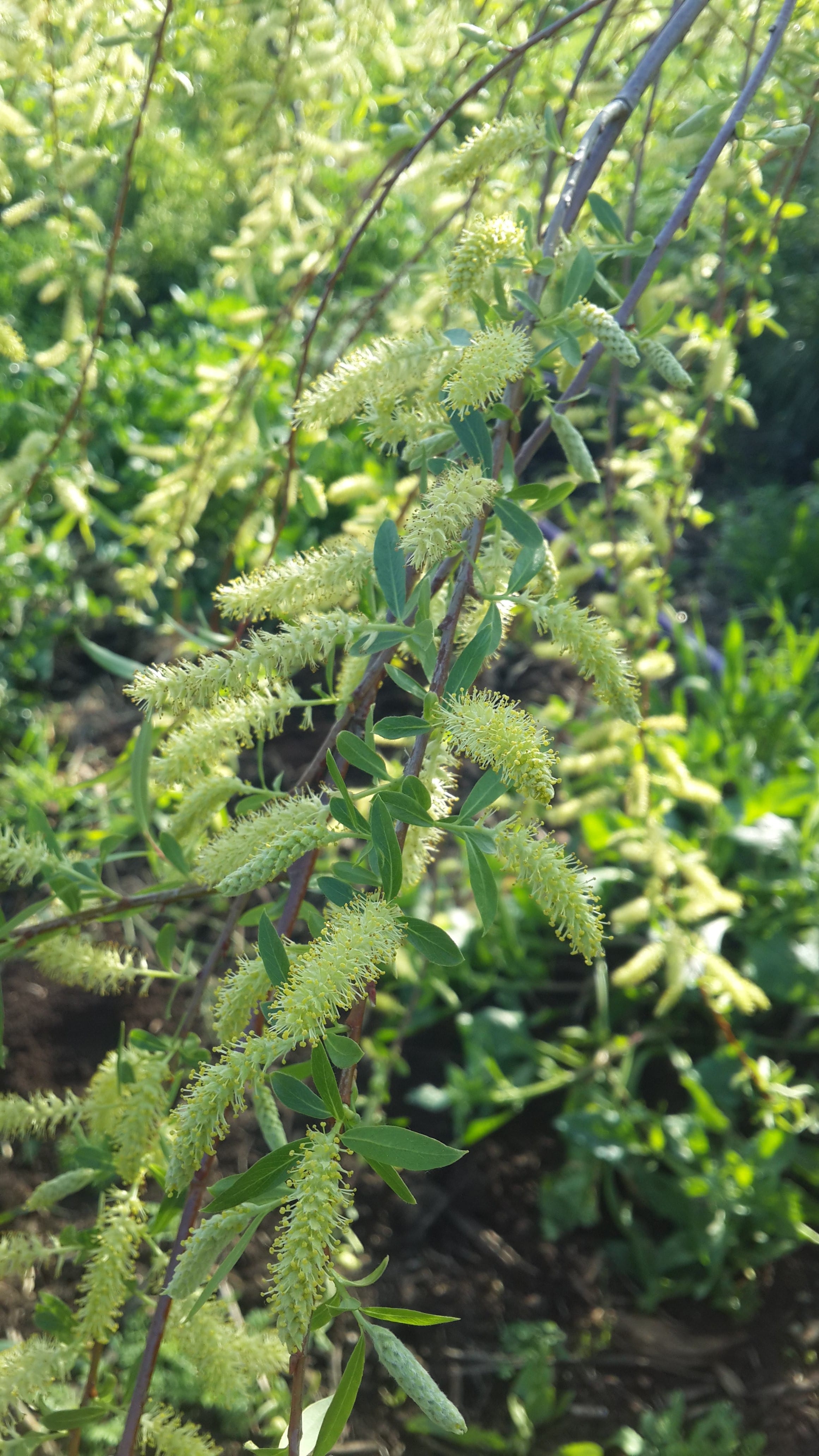
The willow belongs to the Salicaceae family. It is difficult to identify willow species according to their morphology alone due to the morphological similarity among the different species; to date, 350–500 species have been identified around the world. According to the literature, there are four species in Israel, from the Golan to the Dead Sea: brook willow (Salix acmophylla), white willow (S. alba), S. pseudosafsaf and almond willow (S. triandra). In 2017, scientists completed the sequencing of the willow genomes. The willow has attracted extensive research attention around the world, as it is grown as a renewable source of perennial biomass with multiple harvests in the USA, Canada, Sweden and Britain, often involving irrigation with recycled water during summer. Furthermore, the willow tree contains a stock of secondary metabolites in its canopy and bark – phenolic glycosides from the salicylate group. More than 20 such substances have been identified to date; the most

ramathanadic3

common are salicin, salicortin, salidroside, helicon and tremulacin. Some of these metabolites have anti-inflammatory, antioxidant and analgesic properties.

There is great variation among species in the composition of the secondary metabolites, which vary among seasons and among the parts of the plant. This variation has not been examined in the willow species growing in the Land of Israel (an area covering Israel and Jordan).

The willow is a deciduous tree; budding begins in early March and the vegetative growth continues until late November, as a function of the weather and the onset of the rainy season. Willows can be propagated from cuttings; the cuttings have a rapid rooting rate and rapid growth. The tree grows successfully on marginal soils with relatively poor aeration. The rate of

ramathanadiv5

evapotranspiration from the tree is high; therefore, the willow requires high water availability throughout the growing season, and its distribution is limited to the banks of perennial rivers and proximity to springs.

In different places around the world the willow is used as green fodder for grazing animals during the summer, when the herbaceous species are dry and/or have low nutritional value.

In recent years there has been a growing interest in fodder that combines high nutritional values with unique metabolites that may improve the health and well-being of the animals (neutraceuticals). The advantage of the willow as a potential source of fodder in Israel stems from a number of traits: perenniality – it does not need to be replanted each year; a long green season – nine

phone06032016 200

months of the year; tolerance of unaerated, saturated soils; rapid vegetative growth from cuttings; and high accumulation of biomass over a number of harvests. Similarly, it tolerates high-density planting and is able to regenerate from its stem after a large number of harvests.

Research hypotheses:

  1. There are differences in the composition and content of unique metabolites among populations of willow
  2. There are populations of willow in Israel that can be grown with non-industrial treated wastewater
  3. Willow trees can be used as fodder for animals, and can improve their well-being by providing relief from inflammation

Research objectives:

  1. Genetic (DNA) and chemical (unique metabolites) characterisation of willow populations in the Land of Israel
  2. Studying the effect of irrigation with recycled water on tree productivity, unique metabolites and nutritional value
  3. Examining the contribution of the willow to the health of the animals consuming it

Research methods, procedures and results:

To genetically characterise the chosen trees, 17 leaf samples were collected for DNA extraction from trees growing in northern (Golan, Valleys, Carmel), central (Judean Mountains) and southern (Northern Negev) Israel; 17 samples were also taken from northern and central Jordan. Genotyping by sequencing and principal components analysis demonstrated the existence of three populations of willow in the Land of Israel. Not one of them belonged to S. alba; therefore, it was decided to treat the sample as a ‘complex of populations’ belonging to S. acmophylla. Moreover, characterisation of the unique metabolites in this sample using targeted and untargeted, advanced HPLC-MS-TOF identified three different clusters representing three different chemotypes of S. acmophylla. A complete match was found between the genotypes and the chemotypes of the willow trees in the sample. A relationship was also found between the population genotype/chemotype and its sensitivity to wheat rust; among the three clusters, two were resistant and one was sensitive to wheat rust.

A comparative experiment to examine the effect of water quality on indices of growth, unique metabolites and nutritional value took place at Ramat Hanadiv on the southern tip of Mt. Carmel.

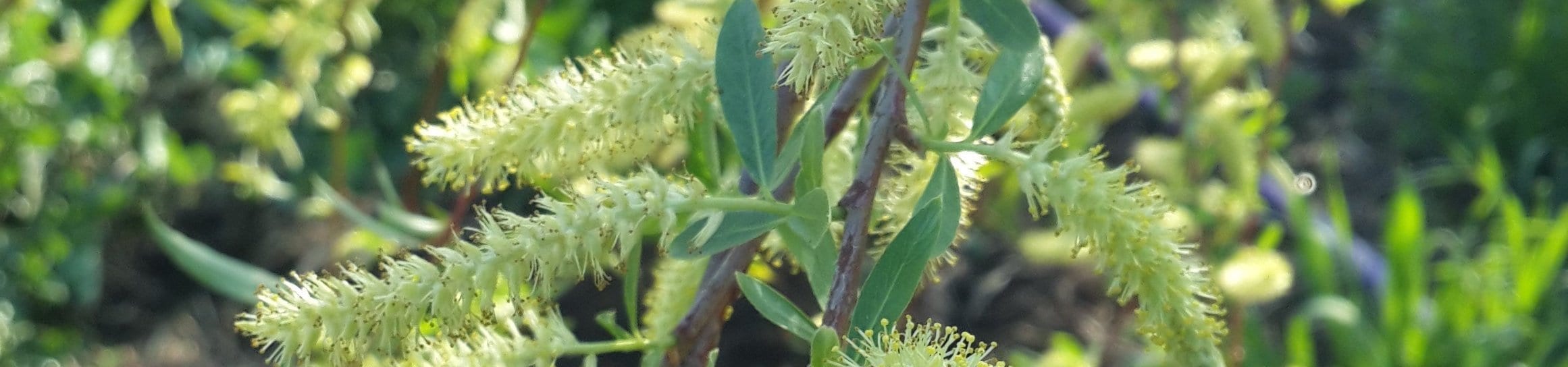
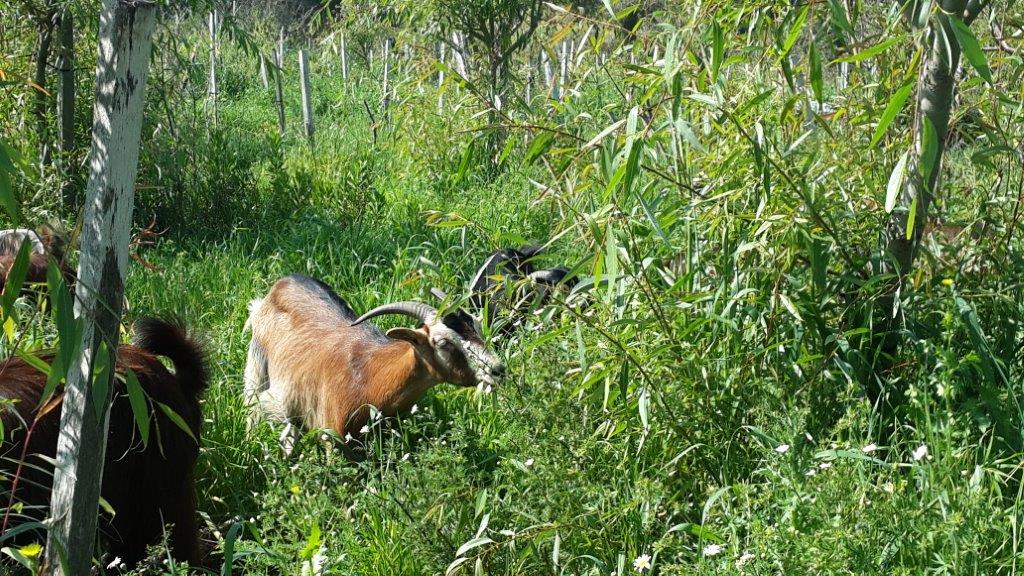
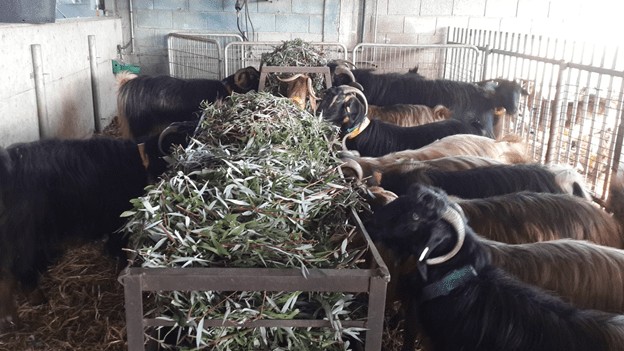
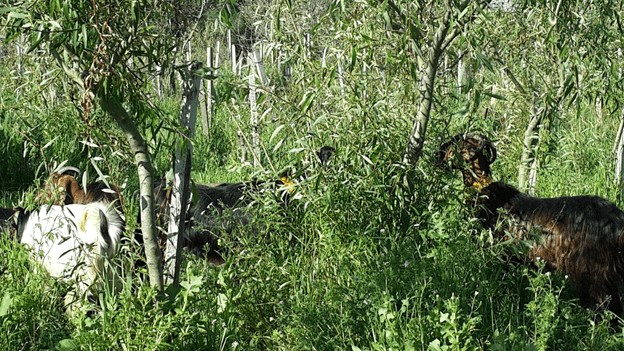
Trees representing ten species of the genus Salix were compared, with five replicates, under an irrigation regime with either fresh water or recycled wastewater (secondary treatment, non-industrial wastewater), for two years (4 continuous seasons). All populations of willow grew well under irrigation with secondary treated wastewater, even better than when irrigated with fresh water. We found an effect of season and water quality on the willows’ productivity traits, nutritional value and content of some of the secondary metabolites. Irrigation with treated wastewater increased biomass production, and raised the shoot protein content and the leaf salicin content. Leaves and stems were intensively consumed by the goats in the experiment. In the first experiment, with 24 Baladi goats, leaf and stem consumption had no negative effect on milk production and reduced the number of somatic cells in the milk, as an estimate of intra-mammary infection and mammary involution at the end of lactation. The concentration of liver enzymes indicated that fattening with willow was very safe. The mineral content of the consumed fodder did not exceed the accepted range. In the second experiment, which was performed on 48 Alpine crossbred goats in late pregnancy, willow consumption constituted 25% of their food portion. The food portion contained 75 g salicin per kg dry matter. The proportion of CD8+ T-cells, common under conditions of stress and inflammation – was identical between treatments at the beginning of the experiment and increased greatly in the blood of all the control goats. In the willow group there was a small increase, but only in the goats infected with intra-mammary infection vectors. Therefore, consumption of willow foliage probably led to changes in the distribution of immune cells in the goats’ blood. It is possible that the components in willow have an immuno-regulatory effect, regardless of intra-mammary infection.

In conclusion, most of the willow trees growing in nature in the Land of Israel belong to the population complex of S. acmophylla, in which three different genotype/chemotypes were identified. Although it was previously though that S. alba was the dominant species in northern Israel, 33 of the 34 samples from the entire Land of Israel belonged to other species. Willow productivity was higher under an irrigation regime with treated wastewater. Willow populations with rapid growth and high content of secondary compounds were identified. The willow is a fodder source with good nutritional traits (high protein, ca. 12% on average, and moderate digestibility, ca. 50%), and properties for relieving stress and inflammation at the end of lactation in goats.

Of further interest...

Accessibility

Physically Disabled in the Gardens

Many trails traverse the Memorial Gardens. We recommend this route, but you
can choose to walk another route.

For further information >>

Sustainability

Establishment of the Partnership for Regional Sustainability

In 2015, Ramat Hanadiv established the Partnership for Regional Sustainability, aiming to combine forces for the quality of life in the region.

For further information >>

Dining Here

Dining

To complete your Ramat Hanadiv experience, you are cordially invited to enjoy the culinary pleasures of Mata’im, the cafe-restaurant on our premises.

For further information >>
Ramat Hanadiv Gardens, May 2018, Zichron Yaacov, Israel.

Establishment of the Partnership for Regional Sustainability

In 2015, Ramat Hanadiv established the Partnership for Regional Sustainability, aiming to combine forces for the quality of life in the region. Five neighbouring councils – Binyamina Givat-Ada Local Council, Zikhron Ya’akov, Hof Hacarmel Regional Council, Jisr A-Zarqa and Alona Regional Council – joined Ramat Hanadiv in order to work together on the challenges of preserving the unique texture of the region surrounding Hanadiv Valley and Taninim River. The point of reference of the partnership lies in two central understandings: the first, that quality of life and residents’ wellbeing are closely linked to the state of the environment in which we live, and the second, that sustainability issues are cross-regional and do not recognise municipal borders. Therefore, the partners committed to raising regional awareness and broadening their perspective from the local scale to the entire region.

The partners chose to focus on three core issues: striving for coexistence of nature, agriculture and humans, promoting sustainable regional transport, and developing sustainable regional economy.

Since its inception, the Partnership has gained a worthy place among both the region’s residents and decision makers. In January 2017, the heads of the five member councils of the Partnership for Regional Sustainability, the CEO of Ramat Hanadiv and 120 members of the Partnership’s leading forum, signed the Partnership Agreement, which defines the vision, aims and directions of action for the region in the coming years. By doing so, the signatories committed themselves to leading the region towards a future of quality of life and consideration for the values of environment and sustainability.

Of further interest...

Accessibility

Accessible Trails

We have worked hard to make our buildings, infrastructure and service accessible to special sectors of the population so that everyone can enjoy an accessible and enjoyable visit to the Memorial Gardens and Nature Park.

For further information >>

Sustainability

Horticultural Therapy at Ramat Hanadiv

Many studies have demonstrated the link between a green environment, nature or flowering gardens and feelings of calmness and serenity, enjoyment and vitality

For further information >>

Dining Here

Dining-The Picnic Site

The picnic area is located near the secondary parking lot. You are welcome to spend time there before or after your tour of the Gardens.

For further information >>
21586540_1482539138500091_7442276502927261688_o-aspect-ratio-x
IMG_7280
Mata'im Restaurant
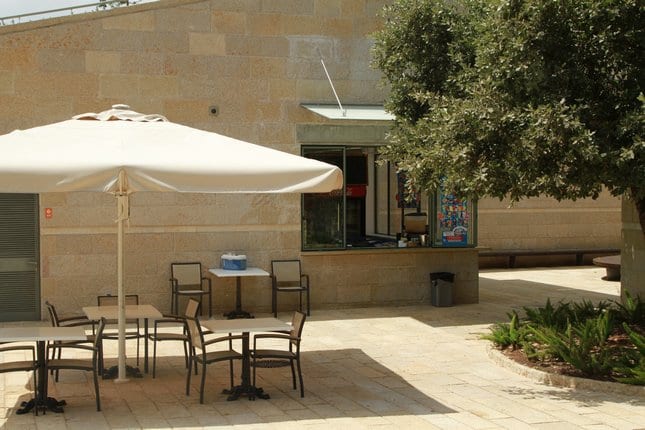
Kiosk
The Picnic Site

“Green” Picnic Area

We offer you a shaded picnic area next to the secondary carpark of the gardens. You’re welcome to spend time there before or after your visit.

This area is located in a pine grove, giving you the opportunity to rest and have a picnic. For the convenience of visitors to the grove, there are picnic tables, water fountains, a dish-washing station and toilets.

We put a lot of effort into making your visit pleasant and ensuring you can have a quiet, relaxing time – without music, fire or smoke. Do not light bonfires or barbecues in this area.

You are welcome to bring a cool box with food, and enjoy the clean air and a pleasant, quiet stay in nature.

picnic areaee

We ask you to eat your picnic using reusable utensils that are beneficial to humans and the environment.

Are you interested in a nice set of reusable utensils for the entire family? You’re welcome to buy one in our InfoShop in the Visitors Pavilion.

The area is accessible to people with disabilities:

  • An accessible carpark adjacent to the picnic area
  • A standard access path with a slope below 8% leads from the accessible carpark to the picnic area
  • Accessible tables in the shade are located on a paved surface and standard manoeuvring area
IMG_8150

We maintain this area for your convenience and enjoyment!

Please be considerate of the other visitors and follow these rules:

  • The area is designed for visitors; do not hold functions, catered events or meetings
  • Please bring food that is ready to eat and do not light a barbecue or fire
  • This area is quiet and tranquil; do not play music or use megaphones, amplifiers etc.
  • The picnic area is part of the Nature Park, which is home to a diversity of plants and animals. Please look after the surrounding nature.

Thank you for your cooperation!

We wish you a safe, quiet, enjoyable stay.

Of further interest...

Accessibility

Accessible Trails

We have worked hard to make our buildings, infrastructure and service accessible to special sectors of the population so that everyone can enjoy an accessible and enjoyable visit to the Memorial Gardens and Nature Park.

For further information >>

Sustainability

Horticultural Therapy at Ramat Hanadiv

Many studies have demonstrated the link between a green environment, nature or flowering gardens and feelings of calmness and serenity, enjoyment and vitality

For further information >>

Dining Here

Dining

To complete your Ramat Hanadiv experience, you are cordially invited to enjoy the culinary pleasures of Mata’im, the cafe-restaurant on our premises.

For further information >>