Did I immediately envision the long summer break when asked to gather a selection of poems about thorns? Was a blinding yellow cast into my eye? The sun is the heart of the matter, governing over the drying of the vegetation and the rise of sugar levels in ripening fruits. And Hebrew contains within it the sharp cut of the kotz, the “thorn,” likely derived from ketz, “end,” and kitzutz, “cutting” or “trimming,” the end of things, and kayitz, “summer,” is the end of ripening, the end of the agricultural season, when the fields dry out and fill with thorns, yet it is also the peak of the fig harvest. In Hebrew, kayitz also means fig, the picking of figs, their harvesting, and then turning the fresh fruit into dried fruit under the sun, the promise of food preservation, of providing for the economy of time. This dizzying movement around the gaping void of absence and pain and the jagged prick, around the edges of things, the awakening to their beauty, to longing, to loss, and to the terrible hidden sweetness of the body asking for more time, time for beauty, time for love, time for relief—and there is no rest. And how can there be, amid the constant violence of awakening, and with it, the opening up to the ripening of pain? Damn it—these bulbs of thorny, sharp dryness, which Hebrew contains through an ancient knowing of the demand for more and more of time’s sweetness in bodies, in fruits, in the desire to return to the place from which we were uprooted and from which we uprooted others, to the notion of the border, the katzeh, “edge,” as a safeguard of the soul, of law, and to the body breaking into all of the abuses of time and spirit, and once again, time covering over the burning.
So these are the poems from a summer that holds an erotic yearning and ecstatic lament over where all the gathered forces will lead (Raab), through the awakening within a dream to the flowering of the thorn and the severing of the “self,” the end of the whole “self” (Wallach), and, by extension, the thorn as the sharpened edge of beauty mocking imperfection (Zechariah), and then Yizhar, S. Yizhar, who is the distillation and linguistic refinement in modern Hebrew of the language of thorns and sun, the language of transcendence and boredom, the cruelty and tenderness of what the sun “scorches” into man and flora, and then to the places, the footholds in the land of displaced people and settled immigrants, Sderot and Aqir, and the expulsion from the land, when the memory of the bond of love and loyalty is bound up with summer and thorns, with the promise embodied in absence as a place beyond place, as a perpetual promise of movement, of opening up to the world (Adaf, Darwish, and Salhoov), to the sorrow of the world; and there, on the cross, a kind of sign of signs of the thorn in our flesh, and the thorn of guilt, Avot Yeshurun crucified, an intersection of unrelenting cultures, driven into flesh and spirit. And finally, the question inverted (Hass)—why does beauty need the embittering edge?
And at the far edge—childhood, and Winnie-the-Pooh, and Eeyore’s healthy appetite for thistles.
For we have an appetite for thorns within us.
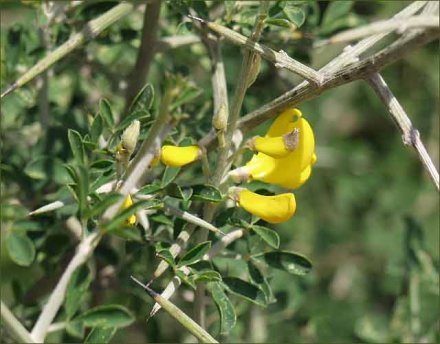
Song of an Ancient Summer
Esther Raab
Summer is—
the flowers on my dress;
the stubble-field,
that spreads on the horizon,
and your lips which rest
on my lips;
summer is—
last poppies,
reddening—
in gold-of-fields;
cool
sprinklers;
moist fences
at midnight;
sun-tanned
skin of the shoulder—
like the good bread
in your hands—
the strong hands;
marrow-of-mornings
drenched-in-dew—
they still burn
from behind the mist-of-time.
1965
translated by Harold Schimmel
Esther Raab
Your roads as then—
are steaming
and along them—
proud thistles
stand tall—
dripping myrrh,
dusty cypresses
are hot-with-resin
at noon;
banana gardens
fan greenly
with light wings;
citrus groves—
of heavy leafage—
like buffalo in a river—
squat sated,
sip water secretly;
and under eucalypti,
of sparse-stems—
gay roofs
redden;
path still meander
in parched fallow-land,
and on a white
sand-dune
a solitary oak inclines;
but your roads—
black ribbons,
catch-the-breath—
are swallowed
beneath a swift wheel—
without a wayfarer,
without horse and camel:
trucks tractors
bulldozers jeeps and Contessas—
like a mad herd—
go frenzied on your roads.
1969
translated by Harold Schimmel
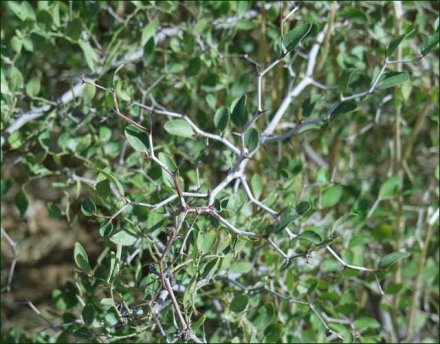
Anat Zecharia
Beauty reminds ordinary people of their boundaries, of their finitude.
The possibilities that never happened in reality are visible to the eye,
like the iron spike of a beach umbrella.
Sderot
Shimon Adaf
It took me twenty years to love this hole in the middle of nowhere. The cotton balls spread a white flame and there was an ill wind in the cypresses
until for the first time I saw, with a just eye,
the unsophisticated houses under the roof of clouds, until I heard the wonderful murmur of the street.
The last whisper emitted by the waves of asphalt mingled
with the bang of the evening on the ground, like the voice of a forgotten woman that had betrayed her and told the truth she tried to hide in her face. Decades of wear and tear have taught the children to caress the water in the stone, to float paper boats in puddles with ridiculous hope. The circus past of the girls bloomed in the swirl of a skirt when the gaze of the crowd sawed through it.
Only loveless places are worthy of absolute love.
Translated from the Hebrew by Vivian Eden
The Eternity of Cactus
Mahmoud Darwish
Where are you taking me, father?
Where the wind takes us, my son…
As the two were leaving the plain where…
Bonaparte’s soldiers surveyed
—the shadows on the old wall of Acre
a father said to his son: Don’t be afraid. Don’t
be afraid of the drone of bullets! Stay close
to the ground so you’ll survive! We’ll survive and climb
a mountain in the north and return when
the soldiers return to their distant families
—Who will live in the house after us, father?
—It will remain as it is, as it has always been, my son!
He felt for his key the way he would feel for
his limbs and was reassured. He said
:as they climbed through a fence of thorns
Remember, my son, here the British crucified
your father on the thorns of a cactus for two nights
and he didn’t confess. You will grow up,
my son, and tell those who inherit their guns
the story of the blood upon the iron…
—Why did you leave the horse alone?
—To keep the house company, my son
Houses die when their inhabitants are gone…
Eternity opens its gates from a distance
to the traffic on night. The wolves of the wilderness
howl at a frightened moon. And a father
!says to his son: Be strong like your grandfather
,Climb with me the last hill of oaks
my son, and remember! Here the janissary fell
from the mule of war. So be steadfast with me
and we’ll return
—When, father?
—Tomorrow. Perhaps in two days, my son!
A reckless tomorrow chewed at the wind
behind them through the long nights of winter
The soldiers of Yeshua ben Nun built
their citadel from the stones of their house. Out of breath
on the path to Qana: Here
Jesus passed one day. Here
he turned water into wine and said
many things about love. My son, remember
tomorrow. Remember crusader citadels
gnawed at by April weeds after
the soldiers’ departure…
Translated from the Arabic by Jeffrey Sacks
Sharron Hass
Mystery:
Why does the beauty (the slippery memory of its accumulation: at times the bird gathers twigs in ice)
birth the knowledge of the other’s pain
Translated by Marcela Sulak
A. A. Milne
“Quite—quite. But your new stripy friend—naturally, he wants his breakfast. What did you say his name was?”
“Tigger.”
“Then come this way, Tigger.”
Eeyore led the way to the most thistly-looking patch of thistles that ever was, and waved a hoof at it.
“A little patch I was keeping for my birthday,” he said; “but, after all, what are birthdays? Here today and gone tomorrow. Help yourself, Tigger.”
Tigger thanked him and looked a little anxiously at Pooh.
“Are these really thistles?” he whispered.
“Yes,” said Pooh.
“What Tiggers like best?”
“That’s right,” said Pooh.
“I see,” said Tigger.
So he took a large mouthful, and he gave a large crunch.
“Ow!” said Tigger.
He sat down and put his paw in his mouth.
“What’s the matter?” asked Pooh.
“Hot!” mumbled Tigger.
“Your friend,” said Eeyore, “appears to have bitten on a bee.”
Pooh’s friend stopped shaking his head to get the prickles out, and explained that Tiggers didn’t like thistles.
“Then why bend a perfectly good one?” asked Eeyore.
From The House at Pooh Corner