The landscape of the Land of Israel is characterized by a rich and unique variety of plant life. Yet alongside its fruit trees and grain fields, a particularly stubborn and prominent ecological group stands out: the thorns. Of the roughly one hundred plant names mentioned throughout books of the Bible, thorny plants account for an impressive share—approximately twenty different names, or an exceptional 20 percent of all botanical references in the biblical text. This figure is no coincidence; it faithfully reflects the botanical and agricultural reality of the Mediterranean hill country of the ancient Land of Israel, as well as the central place occupied by the thorn in the physical and spiritual world of man.
Thorns have accompanied humanity since its inception. Man’s first biblical encounter with the thorn appears in the narratives of Genesis, with the expulsion from the Garden of Eden and the curse laid upon Adam: “Thorns also and thistles shall it bring forth to thee; and thou shalt eat the herb of the field” (Genesis 3:18). This curse expresses a dramatic transformation in the relationship between man and his land: whereas before the transgression the earth yielded its produce effortlessly, from that point onward it would bring forth competing, bothersome, and harmful wild vegetation.
Name Distribution and Level of Botanical Identification
One of the most fascinating puzzles in the study of biblical botany is the multiplicity of synonymous terms for thorns. Biblical and philological scholarship identifies 21 different names for thorny plants or weeds, appearing in a total of 75 distinct references throughout the Hebrew Bible. The following table presents the biblical names for thorns and the number of times each occurs, based on biblical sources and texts.
List of Biblical Names for Thorns and Their Frequency
| Biblical Name | Number of References |
| Kōtz (קוֹץ) | 12 |
| Chōach (חוֹחַ) | 10 |
| Shāmīr (שָׁמִיר) | 8 |
| Shaīyit (שַׁיִת) | 7 |
| ‘Ātād (אָטָד) | 6 |
| Qimshōnīm / Qimmōsh (קִמְשׂוֹנִים / קִמּוֹשׂ) | 5 |
| Sirīm (סִירִים) | 4 |
| Charūlīm (חֲרוּלִים) | 3 |
| Tzenīnīm / Tzinnīm (צְנִינִים / צִנִּים) | 3 |
| Barqanīm (בַּרְקָנִים) | 2 |
| Sillōn (סִלּוֹן) | 2 |
| Chedeq (חֵדֶק) | 2 |
| Na’atzūtz (נַעֲצוּץ) | 2 |
| Galgal (גַּלְגַּל) | 2 |
| Dardār (דַּרְדַּר) | 2 |
| Nahalūl (נַהֲלוּל) | 1 |
| Sirpād (סִרְפָּד) | 1 |
| Sarāvīm (סָרָבִים) | 1 |
| Be’shāh (בַּאְשָׁה) | 1 |
| Shikkīm (שִׂכִּים) | 1 |
From a geographical and literary perspective, the overwhelming majority of these references are concentrated in the Books of the Prophets. The Book of Isaiah leads with eight different names for harmful plants, followed by the Book of Hosea with four. This phenomenon can be explained by the fact that both prophets were active in the Mediterranean hill country, a region characterized by extensive traditional agriculture, and their prophecies are rich in imagery drawn from the local fields and vineyards.
Despite this philological abundance, leading scholars of biblical flora emphasize that the specific botanical identification of most of these thorns remains highly uncertain. The names used in modern Hebrew today for particular plants (such as Syrian thistle, Spanish golden thistle, or knapweed) generally lack a firm historical-scientific basis, having been borrowed arbitrarily from biblical sources by modern Hebrew language revivers. In fact, our ancestors did not assign precise scientific names to each individual species. Rather, they used these words as collective names for ecological categories of prickly ruderal and fallow-land plants that grow together and evoke the same sense of nuisance and aversion.
Paired Thorns and Their Literary Significance
Clear evidence of the collective and literary nature of biblical thorn terminology can be found in the tendency of these terms to appear in fixed pairs. This device serves to intensify the rhetorical message of desolation, threat, or curse through the use of rhythmic synonyms. The use of such pairs makes clear that the biblical text emphasizes imagery and human-agricultural experience rather than strict botanical categorization of one species or another.
The best-known pairs include:
- “Kōtz and Dardār” (קוֹץ וְדַרְדַּר – Thorns and Thistles) (Genesis 3:18; Hosea 10:8) – Represents the fundamental curse of the soil and the destruction of places of worship. Ibn Ezra proposed an intriguing, realistic distinction for this pair, suggesting that kotz denotes large thorns, whereas Dardar (due to its reduplicated diminutive form) refers to the smaller thorns that cover the ground.
- “Shāmīr and Shaīyit” (שָׁמִיר וָשָׁיִת – Briars and Thorns) (Isaiah 5:6; 7:23–25, among others) – A pair appearing exclusively in the Book of Isaiah, describing abandoned vineyards transformed into thorny wasteland. Some scholars suggest that this reflects a process of ecological succession, in which batha vegetation, such as thorny burnet, encroaches upon neglected fields.
- “Qimmōsh and Chōach” (קִמּוֹשׂ וָחוֹחַ – Nettles and Thistles) (Isaiah 34:13; Hosea 9:6) – Used to depict the ruin of fortresses and magnificent palaces that have become wild wastelands.
- Pricking Sillōn and Grieving Kōtz” (סִלּוֹן מַמְאִיר וְקוֹץ מַכְאִב) (Ezekiel 28:24), or “saravim and salonim” (Ezekiel 2:6) – Phrases that emphasize the harmful, piercing, and hostile nature of that which surrounds the prophet.
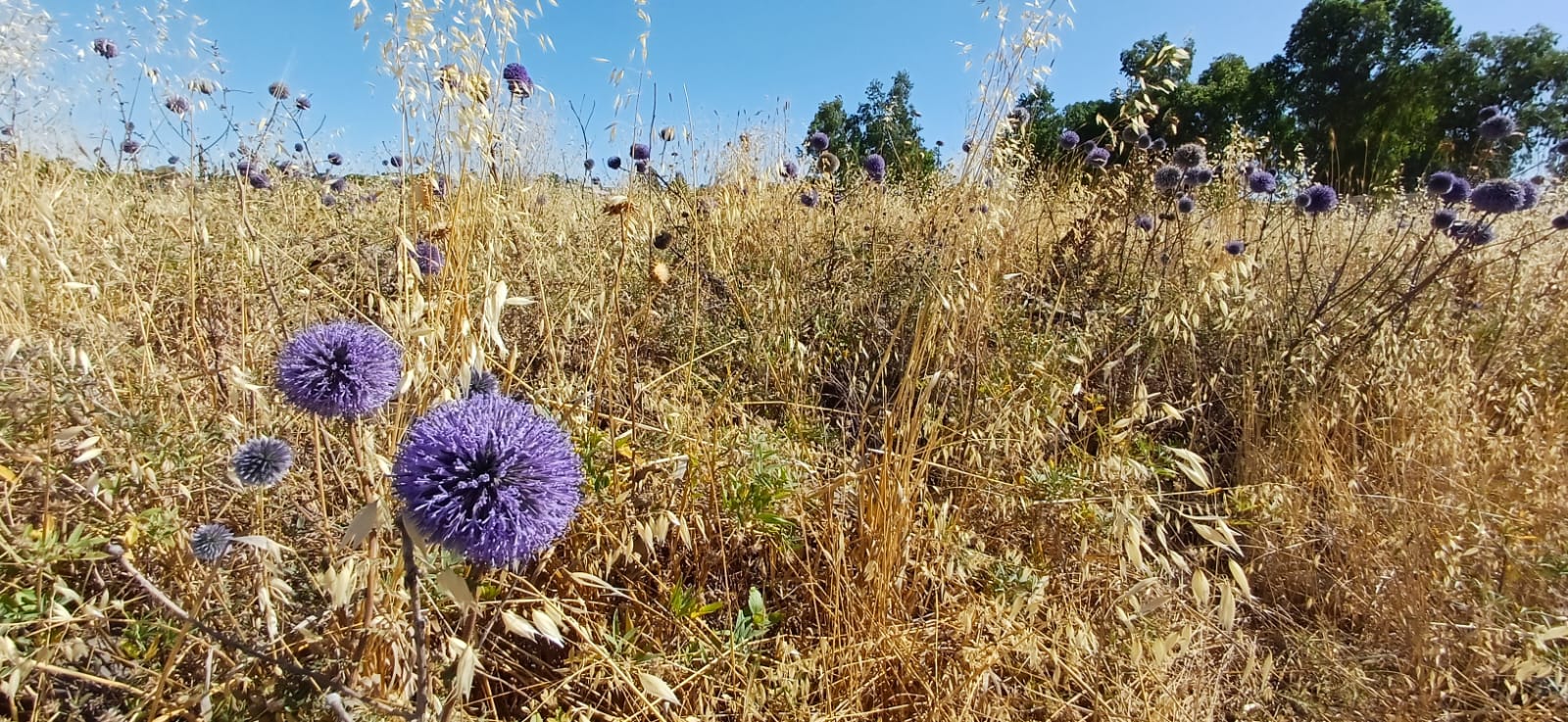
gical reality of the agricultural field in antiquity. Among the three most common identifications proposed for biblical names are nettles (Urtica), characteristic of waste areas; darnel (Lolium temulentum), a widespread weed in grain fields; puncturevine (Tribulus terrestris), common in irrigated summer fields; and various thistle species of the Composite family (Compositae = Asteraceae). Evidence of various weeds has been uncovered at numerous archaeological sites. The botanical-archaeological record demonstrates great similarity to the reality of fields cultivated using traditional agricultural methods up through the first half of the twentieth century, corroborating the difficult agricultural reality described in the Bible, in which the farmer was forced to wage a daily battle against the forces of nature.
Damage Caused by Thorns: Fires in Fallow Land and Fields
One of the most tangible and dangerous hazards posed by thorns in the Land of Israel, both in antiquity and today, is the risk of wildfire during the dry season. With the onset of summer, vast carpets of thorny vegetation dry out, becoming readily available, fast-burning, and highly dangerous fuel.
The Bible addresses this danger in both legal and prophetic contexts, undoubtedly invoking the burning of thorns as an example due to its prevalence in everyday life.
- The Legal Context of Damages: The Book of Exodus sets out the liability of a person who negligently starts a fire: “If fire breaks out and catches in thorns, so that the stacked grain, or the standing grain, or the field is consumed, he who started the fire shall make full restitution” (Exodus 22:5). The phrase “catches in thorns” accurately describes a scenario in which a small fire, perhaps lit to clear thorny vegetation from fallow land, spirals out of control, catches on the dry thorns, and spreads rapidly to cultivated fields, consuming either “standing grain” or “stacked grain” that has already been harvested and gathered.
- The Prophetic and Military Image: The prophets used burning thorns as an image of rapid destruction, warfare, and the principle of “scorched earth.” Isaiah describes wickedness as a fire that first consumes the thorns and then sets the entire woodland ablaze: “For wickedness burns like a fire; it consumes briars and thorns, it kindles the thickets of the forest, and they roll upward in a column of smoke” (Isaiah 9:17). A similar description appears in Psalms, where dry thorny plants (such as tumbleweed, possibly tumble thistle) detach and carry the flames over considerable distances: “O my God, make them like tumbleweed, like chaff before the wind. As fire consumes a forest, as a flame sets mountains ablaze” (Psalms 83:14–15).
Likewise, the famous Parable of Jotham (Judges 9) casts the bramble—a low-growing thorny shrub of little value but highly flammable—as a metaphor for Abimelech, who threatens to unleash a fire that will consume even the mighty cedars of Lebanon: “Let fire come out of the bramble and devour the cedars of Lebanon” (Judges 9:15). The bramble represents flammable thorny shrubs (such as the spiny broom) that act as “pyrophytes,” plants whose propagation and growth across the landscape are accelerated by fire.
Symbols and Expressions of Thorns in the Bible
Due to their threatening presence and the pain they inflict, thorns became an inexhaustible source of parables, metaphors, and idioms in the Bible, many of which remain part of the Hebrew language to this day.
A. “Let Thistles Grow Instead of Wheat” (Job 31:40)
In his final speech declaring his innocence and righteousness, Job asserts that, if he has sinned by wrongfully seizing or exploiting land not his own, his field deserves to be ruined:
“If my land cries out against me
and all its furrows weep together,
if I have consumed its yield without payment
or broken the spirit of its tenants,
then let thistles grow instead of wheat,
and foul weeds instead of barley.”
(Job 31:38–40).
Here, the thistle stands in stark contrast to wheat: instead of nourishing, valuable grain, the earth yields a useless, prickly weed. But the passage may also be understood differently. Job testifies that he has neither exploited nor overworked the land. Such exploitation could ultimately deplete it of minerals and humus, causing thorns to grow in place of useful crops. The land figuratively cries out and weeps over its mistreatment, and the transgressor’s punishment is that his field will bring forth thorns instead of wheat and barley.
B. “Like a Thorn That Goes Up into the Hand of a Drunkard” (Proverbs 26:9)
The Book of Proverbs uses the thorn to depict uselessness and self-inflicted harm: “Like a thorn that goes up into the hand of a drunkard, so is a proverb in the mouth of fools.” The drunkard, unaware of his actions, clutches a prickly thorn instead of a useful tool, injuring himself and those around him. So, too, does the fool who uses proverbs and words of wisdom without understanding, turning wise words into a harmful, distorted instrument.
C. “Like a Lily Among Thorns” (Song of Songs 2:2)
One of the most celebrated poetic images in the Bible sets the beauty of the flower against the ugliness of the thorn: “Like a lily among thorns, so is my darling among the maidens.” The sharp contrast between the magnificent, delicate flower (identified by some scholars as the Madonna lily or sea daffodil) and the drab, unadorned thorns surrounding it emphasizes the beloved’s uniqueness, beauty, and delicateness amidst a hostile environment.
D. “Pricks in Your Eyes and Thorns in Your Sides” (Numbers 33:55)
When the Torah warns the Israelites against allowing the peoples of Canaan to remain in the land, it employs a disturbing physical image of thorns penetrating the body’s most sensitive parts: “Those whom you allow to remain shall be pricks in your eyes and thorns in your sides, and they shall trouble you in the land in which you dwell.” The term sikkim denotes thorns (compare the Arabic shawk), while tzeninim is likewise understood to refer to sharp thorns or prickly snares.
The agricultural lesson is perfectly clear: a farmer who does not thoroughly weed his field and uproot its thorns will eventually see them take over the plot, choke out the crops, and make his life miserable. The same applies on the religious and spiritual level: failure to entirely eradicate idolatrous culture and its moral corruption will pose an existential threat and distort the understanding of what is good, threatening to undermine the purity of the distinctive monotheistic faith and morality that the Bible seeks to proclaim to the world.
Afterword
Thorns in the Bible are not merely a passive element of the Mediterranean landscape of fallow land and wilderness, but living testimony to a complex agricultural and ecological reality that accompanied the ancient Hebrew farmer. The abundance of terms for thorns and their collective appearance underscore the human experience associated with them—one of existential struggle, toil, and the threat of fire, alongside a certain sense of wonder at their remarkable ability to survive the dry conditions of the Israeli summer.
The transformation of thorns into enduring symbols of destruction, desolation, curse, and spiritual and physical threat demonstrates that biblical nature and the biblical language are inextricably intertwined. Together, they continue to nourish our culture and language to this very day.