A (Prickly) Pleasure to Meet You
Israel’s flora is particularly rich in thorny plants. A comprehensive study examining the country’s wild flora revealed that nearly 300 species—more than one-tenth of Israel’s wild plant species—are thorny, prickly, or bear various types of spines. Across the country, particularly during the dry season, when green vegetation becomes scarce, thorny plants become a dominant feature of the landscape. From milk thistles and Syrian thistles to thorny shrubs and trees like thorny burnet and spiny broom, Israel’s thorns tell the story of its Mediterranean and desert vegetation and how plants have evolved to withstand environmental challenges. A summer hike along Israel’s trails can offer a crash course in all things thorny, and you’re invited to join us.
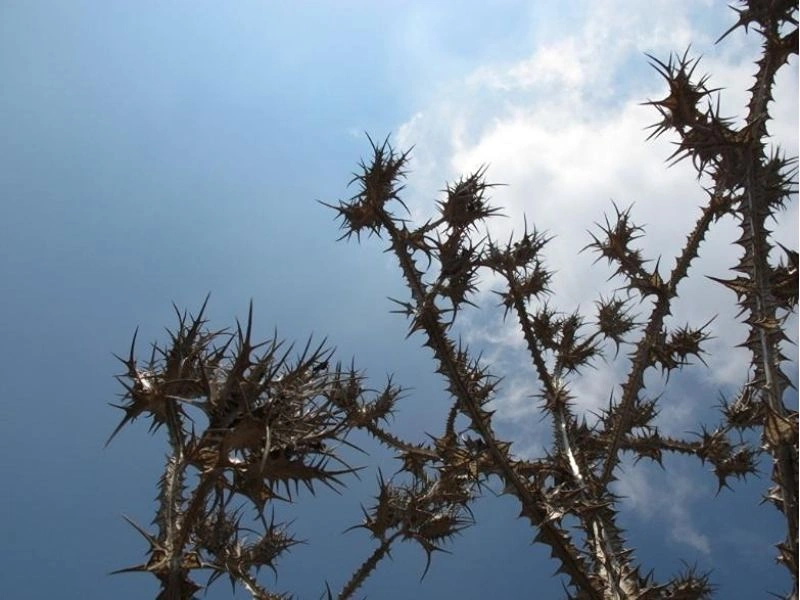
Photo Credit: Yuval Sapir
When You Say “Thorn,” What Do You Mean?
Thorns come in a wide variety of shapes, sizes, and locations across the plant. In everyday Hebrew, we call any prickly projection on a plant, and sometimes an entire prickly plant, a kotz (thorn). Botanically, however, a clear distinction is made among three main structural types, based on their anatomical origin: leaf spines, branch thorns, and cortical prickles.
Spines are essentially leaves that have been modified into sharp, pointed structures. They originate from a leaf or part of a leaf—such as the leaf margin or stipules—that hardens and develops into a spine while remaining attached to the leaf tissue. This type is extremely common in Israel, characterizing plants such as milk thistles and Syrian thistles in the Asteraceae (daisy) family.
Thorns are modified, shortened branches that have hardened into stiff, pointed structures. Such thorns are typical of shrubs and trees such as thorny burnet, spiny broom, and Palestine buckthorn.
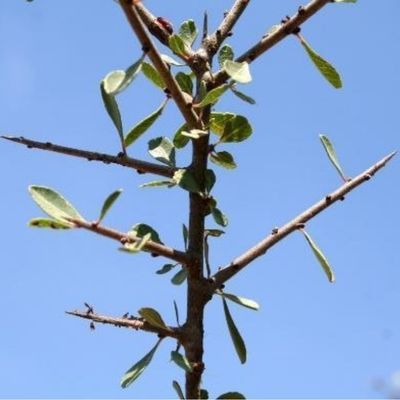
Image: Palestine buckthorn (Rhamnus Lycioides). Buckthorn shrubs grow in the woodlands and scrublands of the Mediterranean region. During the winter and spring, short lateral branches grow with soft tips. Under dry summer conditions, they cease to elongate. The branches, including their growing tips, lignify and transform into thorns.
Photo Credit: Avinoam Danin
Source: Flora of Israel and Adjacent Areas
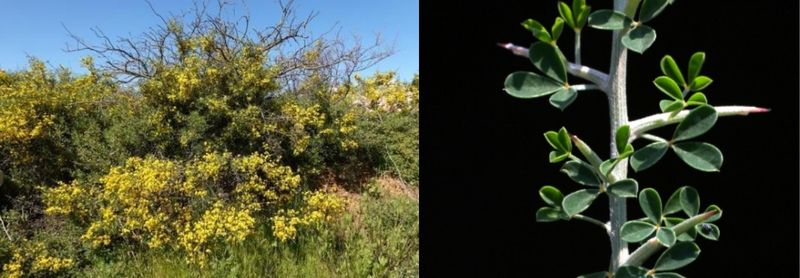
Photo Credit: Avinoam Danin
Source: Flora of Israel and Adjacent Areas
The third structural type consists of prickles, sharp projections originating from the plant’s outer cell layers (epidermis or cortex). Botanically, prickles are not considered true thorns; they do not derive from pre-existing plant organs and are not connected to the plant’s vascular xylem tissue.
This anatomical distinction is more than mere terminology; it reflects how a plant allocates defensive resources from different tissues. Beneath this structural variety lies a shared principle: an investment to safeguard plant resources against loss. Recent studies indicate that thorns and related structures develop selectively on organs essential to the plant’s survival and reproductive success, offering a fascinating glimpse into natural selection in the plant world.
The Evolution of Defense: The Botanical Arms Race
Thorniness is not a fixed trait, but can vary dynamically in response to environmental pressures. In regions subject to prolonged grazing by goats, sheep, or other mammals, many plants develop longer, denser, and sharper thorns. The emergence of thorns is thus no random occurrence, but the outcome of an extensive process of natural selection, what might be described as an “arms race” between plants and herbivores, the animals that feed on them.
Throughout evolution, mutations producing thorns and other sharp structures likely provided plants with a significant survival advantage: these structures reduced the extent to which they were consumed, allowing them to reach the reproductive stage and seed dispersal. In the Middle East generally, and Israel in particular, thousands of years of intensive grazing by domesticated livestock (goats and sheep) and wild herbivores likely accelerated the spread of thorny species. Notably, thorniness evolved independently across multiple distinct plant families, a testament to an exceptionally successful adaptive solution to environmental stress and grazing pressure.
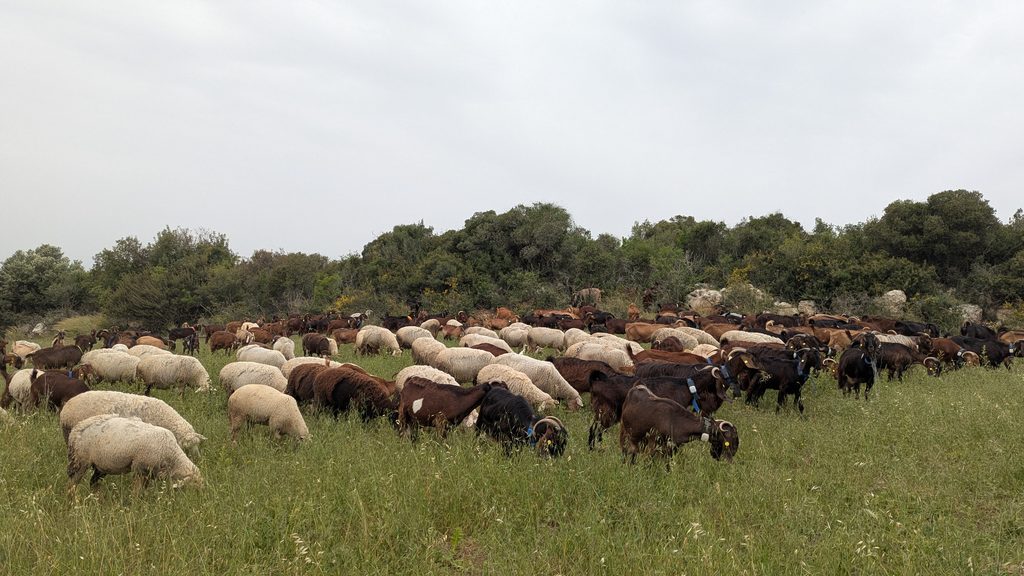
Image: The Ramat Hanadiv herd of sheep and goats grazing in the nature park. Photo By: Maayan Bar-Yoel
Getting Past the Thorns
Despite their formidable thorns, some animals are able to overcome these defenses thanks to specialized physiological adaptations. Goats, for example, can consume thorny plants whole, due to the tough, callous-lined structure of their mouths, while gazelles skillfully nip the delicate leaves of acacia trees from between long protective spines.
It is important to emphasize, however, that thorns usually represent just one layer in a plant’s multi-tiered defense system. Many thorny plants also contain bitter, toxic, or indigestible chemical compounds, and some even release repulsive odors that repel herbivores. This perpetual struggle between plant defenses and animals’ ability to overcome them drives evolution on both sides.
Warning at First Sight
At first glance, thorns appear to be a mechanical deterrent—a sharp structure preventing hungry animals through physical pain. In recent years, evidence has mounted that plant defense begins before physical contact occurs. According to research spearheaded by Prof. Simcha Lev-Yadun, many thorns are accompanied by visual “warning signals” (aposematism): conspicuous colors, spots, and patterns designed to highlight danger and deter herbivores from a distance.
For instance, in many thorny species—such as milk thistle (Silybum marianum), Syrian thistle (Notobasis syriaca), spotted oyster thistle (Scolymus maculatus), and globe thistle (Echinops)—leaves feature bold white veins or marbled spots. High visual contrast helps animals recognize prickly defenses before taking a bite, sparing both parties unnecessary injury.
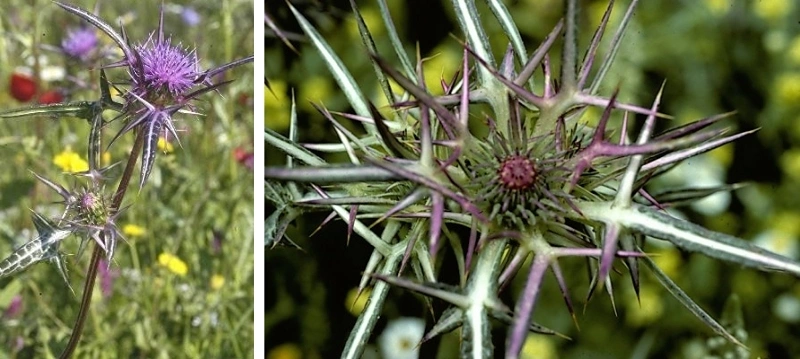
Photo Credits: Right, Ilan Zaharoni / Left, Verna & Walter Näni
Source: Flora of Israel and Adjacent Areas
Research by Ronel further showed that spines on many Israeli species display conspicuous coloration—bright yellow, red, orange, or stark white—rather than merely the dull brown of dried plant tissue. This supports the hypothesis that many thorns double as visual warning signals.
This strategy is not unique to flora; it is also well documented in the animal kingdom. Conspicuous spines frequently feature warning colors: porcupines, hedgehogs, spiny fish, and various invertebrates display dark, white, yellow, or red spines contrasting sharply with their bodies to serve as visual deterrents. Researchers point to this as a striking example of convergent evolution across biological kingdoms.
Resource Allocation: Protecting What Matters Most
As noted above, plants do not invest in thorns uniformly, but instead allocate resources to protecting the organs most vital to their survival and reproduction based on life form. An analysis of Israel’s flora shows that annual plants, whose entire reproductive future depends on seeds produced in a single season, invest most heavily in thorny defenses around their reproductive organs—their flowers and fruits. Nearly 96% of thorny annual species protect these vital organs.
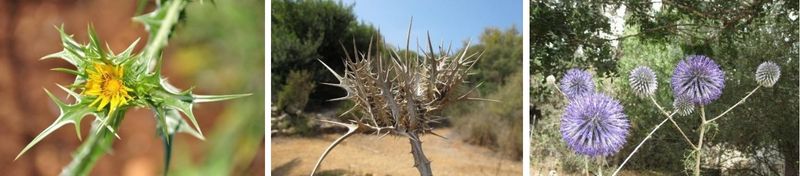
Center Image: Spotted golden thistle (Scolymus maculatus) in the dry season. Photo Credit: Yuval Sapir.
Left Image: Gaillardot’s globe thistle (Echinops gaillardotii) in bloom. The leaves and involucre bracts are prickly. Photo Credit: Yuval Sapir.
By contrast, perennial trees and shrubs that live for many years can “afford” to lose a single season’s bloom. Consequently, they invest more heavily in defending their structural stems and branches. Their fruits are frequently non-thorny, allowing them to attract the very animals that disperse their seeds. This distinction illustrates the finely tuned evolutionary strategy embodied in every sharp point.
The Thorn’s Many Hidden Talents
Although thorns evolved primarily as a defense against herbivores, evolution has “recruited” them for additional purposes. In some species, they assist in seed dispersal; in others, they reduce heat gain and water loss; and some green thorns even carry out photosynthesis. The thorn, then, is not merely one of the plant’s defensive weapons, but a multifunctional structure that performs a range of ecological and physiological roles. In a world of limited resources and fierce competition, the thorn is the plant kingdom’s brilliant solution for ensuring continuity.
Thorns play a crucial role in species survival and the preservation of biodiversity. The seeds of many plants, including alfalfa (medick), sainfoin, and carrot, are equipped with spines that allow them to cling to animals’ fur or feet, effectively “hitching a ride” and traveling considerable distances.
The Green Thorn
Although we tend to think of thorns as dry, rigid structures, in their young stages they may be green and active in photosynthesis. In certain species lacking typical leaves for most of the year, such as spiny broom and thorny burnet, green thorns play a major role in producing food for the plant.
During the hot, dry summer, plants that developed large, soft, fresh leaves in winter and spring—leaves that consume and waste vast amounts of water—cannot sustain them. Many species, including thorny burnet, therefore develop two types of leaves (leaf dimorphism). In winter, they produce large, non-spiny leaves with a high photosynthetic capacity but substantial water loss. As summer approaches, these leaves wither, and the plant produces stems bearing small, prickly leaves that lose far less water, as well as thorns on other parts of the plant.
Another example is the Palestine buckthorn, mentioned above, which sheds its leaves in winter. At this stage, its rigid thorns and the lateral axillary buds remain prominent. With the arrival of spring, some of these buds sprout into leaf rosettes with flowers, while others develop into soft stems. Come summer, elongation ceases, the tips lignify, and the short branches harden into thorns. If, however, the buckthorn continues to enjoy favorable growing conditions during the summer, the short branches do not harden but continue to grow. Generally speaking, stem thorns such as those found on buckthorn, hawthorn, and wild species of almond and pear can be regarded as potential thorns whose prickliness manifests under harsh conditions, remaining soft when conditions are favorable.
In cacti, for example, leaves are modified into spines, substantially reducing surface area and thereby limiting water loss through evaporation in arid climates. The spines also shade the photosynthetic tissues and help reduce the plant’s temperature. More broadly, spines play an important physiological role, particularly in arid environments: they help reflect excess solar radiation, shade photosynthetic tissues, and create a boundary layer that reduces water loss caused by wind and evaporation. The thorn, then, is a multi-purpose tool that protects the plant both from living predators and extreme climatic conditions.
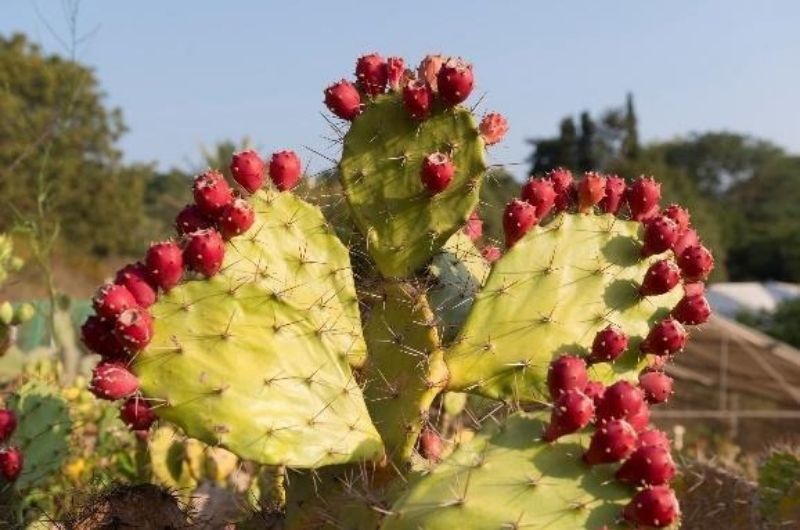
Photo Credit: Yoram Reshef.
See the Beauty of Thorns
In Hebrew literature, the thorn frequently serves as a metaphor for hardship, resilience, and deep-seated roots in parched soil. Numerous biblical references, such as “Thorns and thistles shall it bring forth to thee,” attest to the deep bond between the people of this land and the prickly landscape surrounding them: a landscape symbolizing, above all, the ability to bloom under the harshest conditions.
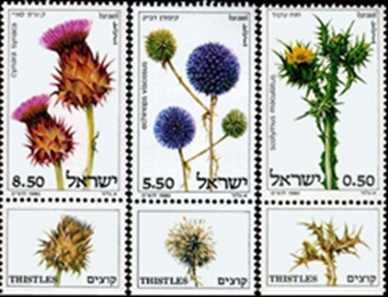
Text by Azaria Alon. Stamp series issued in 1980. Design: Aryeh Glazer.
For the lingering, awe-struck observer who is not afraid of getting pricked, thorns offer a wondrous world of structural beauty and unique aesthetics. As Amos Keinan wrote:
“Make no mistake. A thorn is a beautiful thing, and there is even a gorgeous thorn. Perhaps not so much for one’s backside, but certainly for the eyes. Whoever takes a close look—not merely looking, but truly observing—will realize how much precision, delicate subtlety, almost perfection exists within a thorn. And besides: a thorn is the homeland, it is the Land of Israel, which shall bring forth for you not only the Seven Species, but thorns and thistles as well.”
—Amos Keinan, Tel Aviv, 1980 (kotz.org.il)
Tel Aviv University’s Yehuda Naftali Botanic Garden features living collections of thousands of regional plant species, plus unique botanical exhibits gathered from all over the world.
References
Alon, A. “Thorns in the Land of Israel.” From the Aliyah Bet and Acquisition website, “Imprint of History: Israel’s Stamps” collection.
Danin, A. (1974). “Thorns in Summer.” Lada’at, 4, 23–25. From the Flora of Israel and Adjacent Areas website.
Katz, O. (2017). “Biogeography of Thorny Plants in the Land of Israel.” Negev, Dead Sea and Arava Studies, 9(1), 15–22.
Ronel, M. (2013). Thorniness in the Plants of the Land of Israel. Doctoral dissertation, supervised by Prof. Simcha Lev-Yadun, University of Haifa.
Inbar, M., & Lev-Yadun, S. (2005). Conspicuous and aposematic spines in the animal kingdom. Naturwissenschaften, 92(4), 170–172.
Katz, O., Ronel, M., & Lev-Yadun, S. (2024). Biogeography of a multifunctional trait: Spiny plant species in the flora of Israel and the Palestinian Authority. Flora, 313, 152478.
Lev-Yadun, S. (2016). Defensive (anti-herbivory) coloration in land plants. Cham: Springer International Publishing.
Ronel, M., & Lev-Yadun, S. (2012). The spiny, thorny and prickly plants in the flora of Israel. Botanical Journal of the Linnean Society, 168(3), 344–352.
Further Reading
Danin, A. (1983). “The Beauty of Thorns.” Kol Yom, 25(1). From the Flora of Israel and Adjacent Areas website.
Danin, A. (1983). “The Beauty of Thorns (Part II).” Kol Yom, 26(3). From the Flora of Israel and Adjacent Areas website.