Foreword
Heli Jacobs, CEO
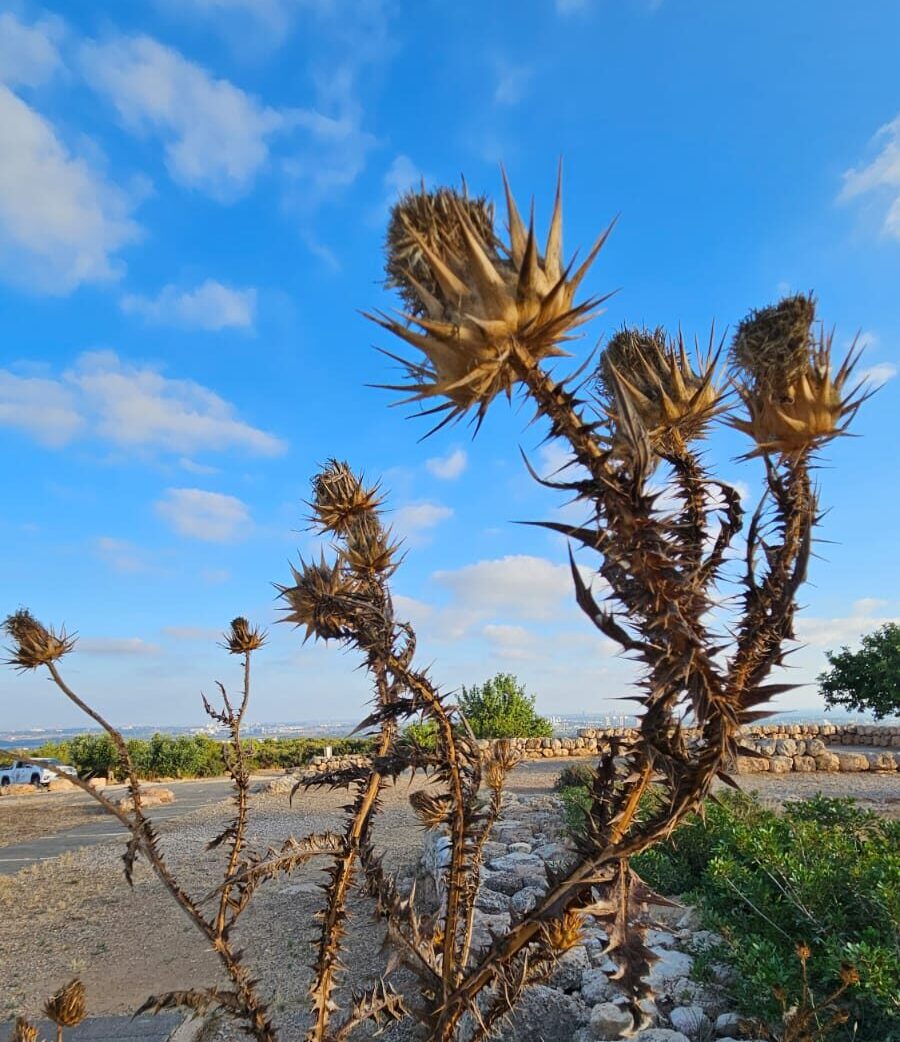
This issue of the magazine is devoted to thorns—plants with something of a PR problem: they represent dryness and roughness, cause pain when they come into contact with the body, and are generally regarded as a necessary yet unwelcome phenomenon.
People sometimes tend to think that a place where thorns grow is unkempt, a place without water, a place devoid of life.
At first glance, the thorn evokes aversion. It pricks, it is stubborn, and it represents the “thorns and thistles” of challenging terrain. Yet in nature, thorns carry a profound secret of survival, protection, and inner beauty.
In Jewish tradition, Moses’ first revelation takes place specifically from within the bush—a simple, low-lying, thorny shrub. The Sages taught us that the bush was chosen to demonstrate that “there is no place devoid of the Divine Presence”: there is no place without vitality, wisdom, the capacity for survival, purpose, and beauty—not even a prickly bush. The bush burns with fire but is not consumed—a symbol of the life force that refuses to surrender to hardship, to fire, to heat.
The philosophy of nature reveals to us that the thorn is not an enemy, but a gatekeeper. It protects the plant, preserves its moisture, and sometimes enables the flower to bloom safely. Thorns are the garden’s shield; they remind us that every pain and roughness in our lives serves a purpose, and that there are limits to what is within our reach. They mark the changing of the seasons and are responsible, through their very toughness and prickliness, for safeguarding all that is tender.
“We can complain that rose bushes have thorns, or rejoice that thorn bushes have roses” (Alphonse Karr)—it is all a matter of choice and perspective.
In this issue, we will embark on a journey in pursuit of thorns—not as a disruption to the landscape, but as silent teachers that show us the power of resilience and the beauty that grows precisely out of roughness.